
AI Hyperscaler Capex Growth Strategy: The APAC Playbook
Key Takeaways
- Hyperscaler capex may top $600B in 2026, then growth slows to ~6% by 2028.
- Inference costs fell 280x in two years — architect to capture that deflation.
- APAC's real constraint is power and land, not chips.
- Keep under half of AI spend in contracts longer than 12 months.
- Demand a 3x value-to-cost ratio per AI workflow before scaling it.
Quick Answer: Hyperscaler capex is forecast above $600 billion in 2026 (MUFG Americas), with growth slowing to roughly 6% by 2028. For APAC mid-market teams, the right response is optionality — measured unit economics per workflow, short contracts, and tested fallback providers — not matching the spend.
Nine of the world's largest cloud and AI operators are forecast to spend roughly $4.1 trillion on AI infrastructure between 2026 and 2030, according to Morgan Stanley research widely reported across financial media in early 2026. For context, that is more than the annual GDP of Japan. The AI hyperscalers' capex spending growth strategy is no longer a tech-sector story — it is the single largest input cost decision affecting every company in Asia-Pacific that plans to run AI in production.
Related reading: Salesforce Marketing Cloud AI Agents + CDP: An APAC B2B Playbook
Related reading: Ecommerce Platform Cost & Speed Comparison 2026: APAC Verdict
Related reading: AI-Powered E-Commerce Fashion Photography Product Images in APAC
Here is the key finding, and it runs against most of what is being published: the capex boom is not primarily a signal that you should spend more on AI. It is a signal that compute pricing, vendor leverage, and regional availability are about to become volatile — and that mid-market teams in Hong Kong, Singapore, Taipei, Sydney and Kuala Lumpur should be optimising for optionality and unit economics, not for scale.
I run an operations business. When I look at a $600 billion capex number, I do not see a stock thesis. I see a supplier whose cost base is being rebuilt, and I want to know what that does to my per-seat, per-workflow cost line in 18 months.
The 2026 numbers, stacked against 2021
The magnitude only makes sense with a baseline.
- 2021–2022: combined big-tech capex sat in the region of $120–150 billion annually, most of it conventional cloud and network build, per company filings (Alphabet, Microsoft, Amazon, Meta investor relations).
- 2024: hyperscaler AI-related capex reached an estimated $235 billion, according to CoBank's analysis of the AI capex cycle.
- 2026 forecasts: MUFG Americas puts "big five" capex above $600 billion in 2026 — a 36% increase over 2025. American Century Investments estimates approximately $775 billion across seven companies for the full year. Datacenter-sector analysts tracking the Big Four alone put plans near $630 billion.
- Forward curve: spending growth is forecast to decelerate to roughly 25% in 2027 and 6% in 2028, per forecasts summarised by Yahoo Finance in early 2026.
That last data point is the one nobody in Asia is planning around. A hyperscaler capex chart by year shows a near-vertical climb through 2026 and then a flattening. Capex that flattens after a five-year sprint means depreciation schedules mature, utilisation pressure rises, and vendors get hungry for committed workloads. Buyers who kept flexibility win that round.
Capex spending is a cost you inherit, not a cost you avoid
What is AI CapEx spending? In this context it is capital expenditure on physical AI capacity: GPU and accelerator clusters, data centre shells, power and cooling plant, and long-haul networking. It is recorded on the balance sheet and depreciated over years — commonly three to six for servers.
Related reading: Salesforce Genie CDP Competitive Advantages 2026: APAC Verdict
Related reading: Shopify vs Adobe Commerce Platform Comparison: An APAC View
That accounting detail matters to you. Depreciation from a $600 billion build cycle flows into cloud gross margins, and cloud gross margins flow into the price of the API you call 40,000 times a day. Hyperscaler capex meaning, translated for an operator: this is my future cost-of-goods.
The counterweight is efficiency. Stanford HAI's AI Index 2025 reported that inference cost for GPT-3.5-level performance fell by over 280-fold between November 2022 and October 2024. Two forces are pulling in opposite directions — capital intensity pushing prices up, model efficiency pushing them down. So far efficiency has won on a per-token basis. Your job is to make sure your architecture captures that deflation instead of locking it out with a three-year commitment.
Ready to Transform Your Ecommerce Operations?
Branch8 specializes in ecommerce platform implementation and AI-powered automation solutions. Contact us today to discuss your ecommerce automation strategy.
Examples of AI hyperscalers — and the second tier that matters more in APAC
What are examples of AI hyperscalers? The core group is Amazon (AWS), Microsoft (Azure), Alphabet (Google Cloud), Meta, and increasingly Oracle, CoreWeave, xAI and Tesla in the broader "nine hyperscaler" framing used by Morgan Stanley. Synergy Research Group has tracked hyperscale operators for years and consistently finds the top three cloud providers holding roughly two-thirds of the global cloud infrastructure services market.
But in Asia-Pacific, your practical shortlist is wider: Alibaba Cloud, Tencent Cloud, Huawei Cloud, NTT, Chunghwa Telecom's regional facilities, SingTel's Nxera, and Australian operators like NEXTDC. A Greater China retail group I worked with ended up splitting workloads across a US hyperscaler for tooling and a mainland provider for consumer data — not for cost reasons, but because that was the only way to satisfy two regulators at once.
Power and land, not chips, are the APAC bottleneck
The International Energy Agency's Energy and AI report estimated global data centre electricity consumption at around 415 TWh in 2024 — roughly 1.5% of world electricity — and projected it could more than double to approximately 945 TWh by 2030.
This is where Asia-Pacific diverges sharply from the US build-out:
- Singapore held a de facto data centre moratorium from 2019 to 2022 and has since allocated new capacity selectively — IMDA's Green Data Centre Roadmap set out at least 300 MW of additional capacity in the near term, with more contingent on green energy. Capacity is rationed, not abundant.
- Hong Kong has land constraints and power tariff exposure that make large greenfield AI campuses difficult; most enterprise AI here runs on capacity located elsewhere in the region.
- Malaysia (Johor), Indonesia and Thailand have absorbed the overflow, with Johor emerging as one of the fastest-growing data centre markets in the world per multiple industry trackers including DatacenterDynamics reporting.
- Japan, Korea and Australia are adding sovereign-adjacent capacity, often with government co-investment.
Operational consequence: latency and residency are now geography problems with waiting lists. If your AI workflow needs sub-100ms response from a specific jurisdiction, check capacity availability before you design the product. I have seen roadmaps slip a quarter on region availability, which is a stupid way to lose a quarter.
Ready to Transform Your Ecommerce Operations?
Branch8 specializes in ecommerce platform implementation and AI-powered automation solutions. Contact us today to discuss your ecommerce automation strategy.
AI spending is growing faster than AI value capture
Gartner has forecast worldwide generative AI spending in the hundreds of billions annually, with the majority flowing to hardware, devices and services rather than software. Meanwhile, MIT Media Lab's much-discussed 2025 State of AI in Business research found that roughly 95% of enterprise generative AI pilots produced no measurable P&L impact.
Put those two together and you get the actual mid-market risk. It is not that you will underspend on AI. It is that you will replicate hyperscaler behaviour — front-load capacity, then hunt for a use case — at a scale your balance sheet cannot absorb. Hyperscalers can carry a 6% growth year in 2028 and a few stranded assets. A 200-person distribution business in Taipei cannot.
Four pillars beat forty pilots
What are the four pillars of an AI strategy? The framing varies by consultancy, but for an APAC operating company I use four that map to things you can actually measure:
1. Data readiness
Can a model reach your data with permission and lineage? Most mid-market failures in Hong Kong are ERP and PIM problems wearing an AI costume. Fix the source of truth first.
2. Unit economics per workflow
Every AI workflow gets a cost line and a value line. No exceptions.
1cost_per_task = (tokens_in × price_in + tokens_out × price_out)2 + retrieval_cost3 + human_review_minutes × loaded_hourly_rate / 6045value_per_task = minutes_saved × loaded_hourly_rate / 606 + error_cost_avoided78keep_if: value_per_task / cost_per_task > 3
A 3x threshold sounds aggressive. It is deliberately aggressive, because model prices, task volumes and review overhead all move, and a 1.2x workflow becomes loss-making the moment anything drifts.
3. Vendor optionality
Abstract the model call. Route by task class, not by loyalty.
1routing:2 classify_ticket: { primary: small-fast-model, fallback: mid-tier }3 draft_customer_reply: { primary: mid-tier, fallback: frontier }4 contract_review: { primary: frontier, fallback: human }5constraints:6 residency: { sg: [sg-region], hk: [hk-region, sg-region] }7 max_cost_per_1k_tasks_usd: 12
If switching providers requires a rewrite, you have written the hyperscaler a call option on your margin.
4. Team throughput
AI capacity without trained operators is an unused gym membership. Track adoption per role and per workflow, weekly. Where teams are thin, the more honest answer is often a distributed hire or a managed contractor in the region rather than a new licence tier — talent is usually the constrained input, not compute.
Ready to Transform Your Ecommerce Operations?
Branch8 specializes in ecommerce platform implementation and AI-powered automation solutions. Contact us today to discuss your ecommerce automation strategy.
Consolidation is coming for your vendor list, not your workloads
The capex arms race raises the entry cost for foundation model training beyond almost everyone. Reuters and others reported multiple 2025–2026 funding rounds in the tens of billions for frontier labs. That level of capital requirement implies fewer frontier model providers, not more.
But the opposite is happening one layer up. Open-weight models from Meta, Alibaba's Qwen family, DeepSeek and Mistral have pushed capable inference onto commodity hardware. For a mid-market APAC team, the practical read is:
- Frontier reasoning: two or three global suppliers. Assume price and policy changes are outside your control.
- Mid-tier workhorse tasks: a competitive, deflating market. Re-tender annually.
- Small/on-device tasks: increasingly free at the margin. Move volume here aggressively.
An AI hyperscalers capex spending growth strategy built on $600 billion a year needs utilisation. Utilisation needs committed customers. Committed customers get discounts — and lose flexibility. Read every reserved-capacity contract with that trade-off in front of you.
Three benchmarks to hold yourself to in 2026
- Cost per completed workflow, tracked monthly. If it is not falling year over year while the models improve, you are not capturing industry deflation.
- Share of AI spend under contracts longer than 12 months. For most mid-market APAC teams I would keep this under half. Capex growth decelerating to ~6% by 2028 (Yahoo Finance-reported forecasts) means the buyer's position improves with time.
- Percentage of workflows with a tested fallback provider. Not documented — tested, in the last 90 days.
Ready to Transform Your Ecommerce Operations?
Branch8 specializes in ecommerce platform implementation and AI-powered automation solutions. Contact us today to discuss your ecommerce automation strategy.
Where this goes next
The capex chart will flatten. That is the clearest signal in the data: from 36%+ growth in 2026 to roughly 6% in 2028 on current forecasts. When it does, the story shifts from who can build to who can fill. Expect regional pricing to get more competitive as Johor, Osaka and Sydney capacity comes online, expect sovereign and residency-priced tiers to become normal in APAC contracts, and expect the frontier-model premium to compress for everything except genuine reasoning work.
The companies that win this cycle in Asia-Pacific will not be the ones that spent earliest. They will be the ones with clean data, measured unit economics, and a model layer they can swap in a sprint. In my experience, the teams that treat AI like a vendor management discipline outperform the teams that treat it like a moonshot — every time.
If you are mapping AI workflows against a regional operating footprint and want a second set of eyes on the build-versus-buy and vendor-concentration questions, Branch8's team works across Hong Kong, Singapore, Taiwan, Vietnam and Australia — start a conversation with us.
Sources
FAQ
AI CapEx is capital expenditure on physical AI capacity — GPU and accelerator clusters, data centre shells, power and cooling plant, and networking. It sits on the balance sheet and depreciates over roughly three to six years for servers. That depreciation flows into cloud gross margins, which is why hyperscaler capex eventually shows up in the price you pay per API call.
About the Author
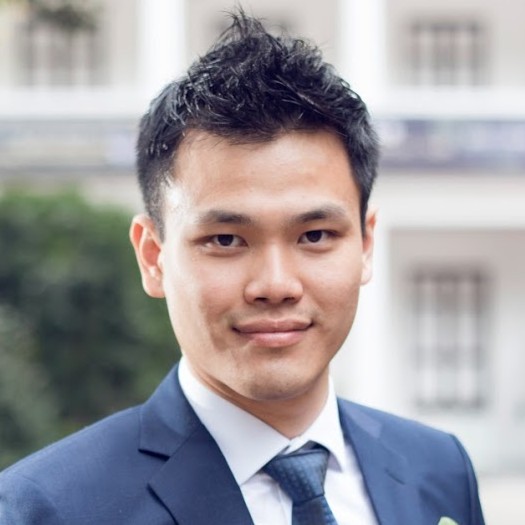
Matt Li
Co-Founder & CEO, Branch8 & Second Talent
Matt Li is Co-Founder and CEO of Branch8, a Y Combinator-backed (S15) Adobe Solution Partner and e-commerce consultancy headquartered in Hong Kong, and Co-Founder of Second Talent, a global tech hiring platform ranked #1 in Global Hiring on G2. With 12 years of experience in e-commerce strategy, platform implementation, and digital operations, he has led delivery of Adobe Commerce Cloud projects for enterprise clients including Chow Sang Sang, HomePlus (HKBN), Maxim's, Hong Kong International Airport, Hotai/Toyota, and Evisu. Prior to founding Branch8, Matt served as Vice President of Mid-Market Enterprises at HSBC. He serves as Vice Chairman of the Hong Kong E-Commerce Business Association (HKEBA). A self-taught software engineer, Matt graduated from the University of Toronto with a Bachelor of Commerce in Finance and Economics.